Project record
Record an existing electrical service without opening equipment
Collect accessible facts and unknowns for a qualified electrical review.
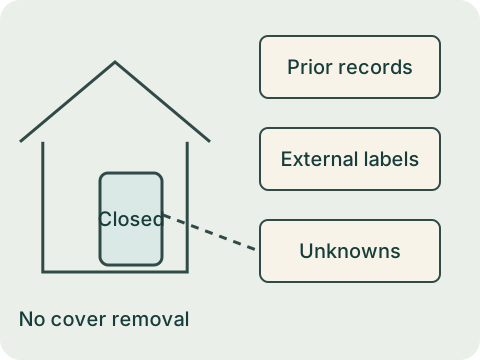
Use records and ordinary accessible observations
Begin with previous permits, an available inspection report and invoices or drawings from known work. Record the source and date of each document. A property listing that mentions an upgraded panel is a lead to investigate, not a confirmed specification. Ask a qualified contractor what information they need before deciding whether anything should be photographed.
Record accessible exterior labels and household equipment information only where doing so does not require opening electrical equipment, removing covers or approaching damaged equipment. Leave internal identifiers and condition assessment to the qualified party. A missing label is an unknown, not permission to uncover a live assembly.
Keep labels separate from capacity conclusions
A label, breaker number or apparent physical size does not establish the available capacity for a proposed project. Existing service conductors, utility arrangements, protective devices and the project's applicable load calculation require review together. The homeowner record should preserve the observed label as a fact with a location and source.
List the major existing and proposed equipment with model references and available nameplate information. Keep reported operating problems, prior repairs and planned additions in separate entries. Do not infer a fault from a nuisance event or use the sum of appliance numbers to select a new main rating.
Prepare an editable review brief
Organize the brief into known documents, observed information, planned equipment and questions. Include access restrictions and whether there are critical household devices that require outage planning. Ask the contractor to correct assumptions and identify what assessment or utility information is still needed.
If damage, unusual heat, a burning smell or a downed line is involved, use the relevant emergency or utility process rather than a planning request. HAUSE intake is a project-planning contact, and this portal does not establish emergency availability. The record is useful because it shows what is actually known and keeps uncertain details available for qualified review.
A worked planning example
An old invoice describes a replacement panel, while a property listing calls the entire service upgraded. Keep both statements with their sources. They do not necessarily describe the same completed work. Ask the qualified reviewer which actual records and site information are needed to establish the existing arrangement.
Suppose a label is not readable from an ordinary accessible position. Write 'identifier not recorded' and leave the equipment closed. The reviewer can decide how to obtain the missing information. This makes the brief more useful than a guessed number, and it avoids treating the effort to complete a web form as a reason to expose electrical equipment.
Keep in your brief
- Keep covers closed.
- Record the source of each fact.
- Do not convert labels into a service-sizing decision.
Primary references
- Electricians compliance guide — TDLR
Texas
- Electrical equipment safety — CenterPoint Energy
Houston utility safety context
- Downed power lines — CenterPoint Energy
Houston utility safety context