Equipment planning
Plan home EV charging as an equipment and use question
Connect driving needs, actual charger specifications and electrical review.
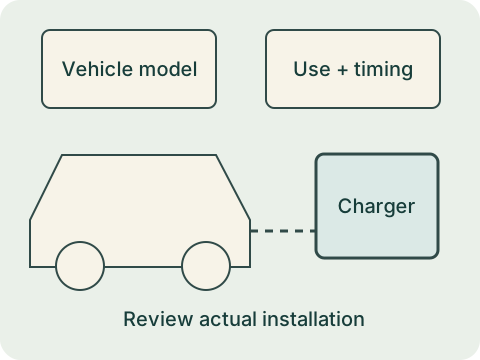
Describe the charging need before a product
Record the vehicle, usual parking location and typical time available for charging. State whether the vehicle or parking arrangement may change. These details help a qualified installer discuss options without assuming that every household needs the highest advertised charger power. The Department of Energy describes different home charging options and the need to consider the home's electrical situation.
Collect the selected vehicle and charging equipment specifications. Keep the maximum advertised charging rate separate from what the vehicle, circuit and installation can actually support. Charging duration depends on the vehicle and operating conditions, so this planning record does not promise a fixed number of miles or a guaranteed overnight result.
Review the location and electrical interfaces
Describe the parking space, route to the proposed equipment and ownership or association constraints. Take ordinary accessible photographs if useful; do not uncover wiring or open a panel to produce a planning record. Ask the electrical professional which site information and load assessment are required.
The proposal should identify the equipment model, installation scope, any service questions and the local permit responsibilities. Ask how other planned equipment is included in the review. An inventory watt total is not a charger circuit design, a service-capacity decision or confirmation that an existing receptacle is suitable.
Compare practical scopes
Compare quotes using the same product and location assumptions. Identify who supplies the charger, what installation work is included and which exclusions remain. Keep utility coordination separate if the proposal involves a service change. Do not infer that every charger requires one, or that none ever does.
At handover, retain the equipment instructions, applicable permit and inspection records and the installer's project documentation. Add any operating questions and warranty contacts. A clear project record connects the intended use to the actual selected equipment and the responsible review, while avoiding invented installation prices or availability.
A worked planning example
A household has selected a vehicle but not a charger, and expects to change parking locations later. The first record can state those facts without filling the charger field with the most powerful product advertised. Ask the installer which equipment and location information are needed to evaluate practical options.
When a product is selected, update its actual specification and the installation scope together. If the quote changes, preserve the reason: equipment substitution, route, related work or another stated item. A lower equipment price is not necessarily a lower installed scope. This comparison helps the household ask precise questions without predicting charging performance or prescribing a circuit.
Keep in your brief
- Collect actual vehicle and charger specifications.
- Ask for a property-specific electrical review.
- Compare like-for-like installation scope.
Primary references
- Charging electric vehicles at home — U.S. Department of Energy
United States; local Houston requirements require separate review
- Permits — Houston Building Code Enforcement
Houston, Texas
- Electric service request — CenterPoint Energy
CenterPoint Houston electric service territory, where applicable