Project record
Prepare the household for access and service interruptions
Record practical needs without inventing a safe work procedure.
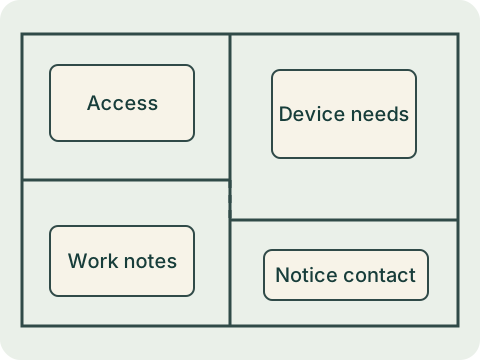
Discuss access through the actual property
Ask the contractor which areas they need to access, what must be moved and which areas will be restricted. Record any locked gates, occupied rooms, parking limits or fragile finishes. Agree who protects retained belongings and repairs related finish work. Do not assume the work is confined to the visible panel location.
Keep household arrangements separate from technical electrical procedures. The homeowner planning record should not instruct someone to remove equipment covers, isolate circuits or create temporary power. Those tasks belong to the responsible qualified parties under the applicable project requirements.
Describe interruptions and essential needs
Ask what services are expected to be interrupted and how notice will be given. Record the contractor's stated duration and any utility conditions as dated information, rather than a guaranteed outage length. Identify household members and equipment that need an individual plan.
Where a critical device is involved, obtain appropriate advice about continuity from the responsible professional or provider. The portal does not specify an extension-cord, generator or alternative-supply arrangement. Keep the need visible and identify who is answering it before the interruption is treated as confirmed.
Agree on communication and closeout
Establish a contact for schedule updates, unexpected findings and authorization of changes. A short daily note can record announced access restrictions, questions and responses without diagnosing a technical condition. If the scope changes, ask for the effect on access, service coordination and price treatment in writing.
At handover, record what is complete, which documents were provided and which matters remain open. Keep household observations distinct from inspection acceptance. Use official emergency channels for immediate electrical hazards; HAUSE intake is not represented as an emergency service. The planning brief helps responsible people coordinate the actual work rather than certifying that an area is safe to use.
A worked planning example
A household member works from home and another relies on an essential device. Record those needs before accepting an interruption plan. The contractor may need access to additional locations, while the utility arrangement may still be conditional. Those are coordination questions rather than evidence that the household can remain in every work area.
Ask the relevant responsible party about continuity needs instead of selecting an improvised temporary supply from an online checklist. Preserve the agreed notices, access restrictions and contact process. If the scope changes, review the household arrangements again. A complete planning record can still contain an unresolved question that needs specialist advice.
Keep in your brief
- Confirm access and restrictions with the contractor.
- Make critical household needs explicit.
- Keep technical switching outside the homeowner tool.
Primary references
- Electrical equipment safety — CenterPoint Energy
Houston utility safety context
- Downed power lines — CenterPoint Energy
Houston utility safety context