Equipment planning
Plan several electrical additions as one evolving project
Record future equipment without assuming a panel upgrade is the required solution.
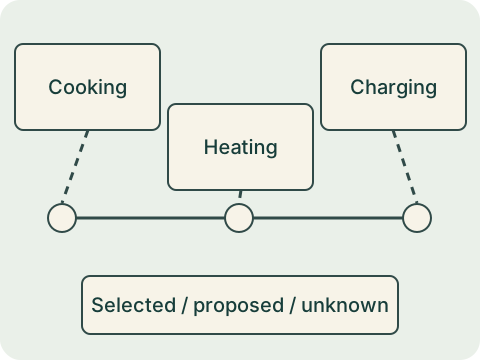
List current and future decisions
Record what is installed now, what has been selected and what is only being considered. Include equipment model information where available and identify missing specifications. A plan to change cooking, heating or vehicle charging over several years should be visible to the reviewer, even when only the first purchase is imminent.
For each proposed addition, state the reason for the change and the desired timing. Keep the homeowner goal separate from a chosen technical solution. 'Support the selected equipment' describes an objective; 'install a particular panel rating' is a design proposal that still needs justification.
Ask the electrical and utility questions together
Request an explanation of the property-specific assessment, applicable load method and options considered. The assessment may identify decisions about equipment, circuits, controls or service arrangements; this portal does not choose among those options. Ask which assumptions are tied to a specific product and what must be revisited if that product changes.
If a service change is proposed, establish who handles the utility request and local permit process. A retail electricity account is not the same as a construction or service-change request. Confirm which information the utility requires and what parts of the plan remain conditional on its response.
Keep phases genuinely coordinated
Use a dated scenario for each phase and preserve the earlier records. Ask what completed work is intended to remain useful for later phases and which future assumptions are unconfirmed. Avoid promises that a present investment will accommodate every later appliance merely because space appears available in a cabinet.
Compare the written scope, responsibilities and user-entered quote amounts for the current phase. Save the design and inspection records actually produced. The project brief should let another qualified person understand the equipment assumptions and previous decisions, without presenting an illustrative watt sum as engineered future capacity.
A worked planning example
A homeowner plans a cooking change now and considers different heating equipment later. The current equipment record should distinguish the selected product from the speculative future option. Ask the qualified reviewer which conclusions apply to the selected product and which depend on the future choice.
If the future equipment has no verified specification, keep that input unresolved. Do not copy a value from another model merely to make the inventory appear complete. A later phase can carry its own updated assessment and quote. This preserves the household's longer-term goal while avoiding a promise that a present installation accommodates an undefined future load.
Keep in your brief
- Show future equipment explicitly.
- Ask which assumptions depend on the selected products.
- Do not equate spare physical spaces with capacity.
Primary references
- Electricians compliance guide — TDLR
Texas
- Electric service request — CenterPoint Energy
CenterPoint Houston electric service territory, where applicable
- Electric service standards — CenterPoint Energy
CenterPoint electric service territory, where applicable