Quotes
Compare electrical-project quotes using entered scope and amounts
Understand differences before choosing by total.
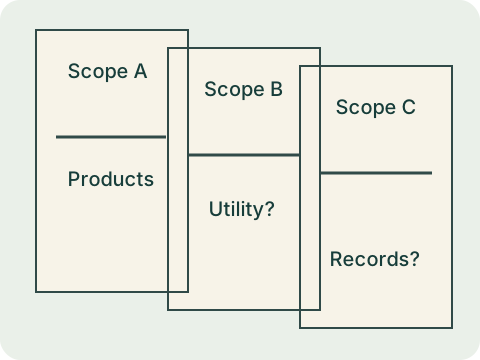
Give every bidder the same project record
Supply the actual project objective, selected equipment, available records and unresolved questions. Ask each bidder to identify assumptions made about the existing service and utility arrangements. A proposal for replacement equipment and one for a service change may cover different work, even if both use the phrase 'panel upgrade'.
Make a scope comparison with equipment model, design or assessment, local permit responsibilities, utility coordination, installation and closeout documentation. Add any adjacent repair or access work that matters to the property. The list should reflect the real proposal rather than a universal package.
Separate defined work from uncertainty
Record inclusions, exclusions and conditional items using the bidder's wording. Ask how concealed conditions or authority requirements will be documented and authorized if they change the scope. A contingency figure does not itself explain which work is included.
Verify the actual electrical contractor and relevant licensing and registration through official sources. The quote tool cannot perform that check or establish workmanship quality. A total should not be used as a substitute for confirming who is responsible for the work and what they propose to supply.
Make the arithmetic reviewable
Enter quantities, low and high unit amounts, fixed charges and a user-supplied tax assumption from the documents being compared. The calculation displays each multiplication and subtotal. It supplies no Houston market price, permit fee default or guaranteed final amount.
Save the result with currency, document dates and exclusions. A range reflects only the entered assumptions; it is not a prediction of what a contractor will charge. Ask the bidder to reconcile missing or different lines in writing. Preserve authorized changes and compare the final account against the accepted scope, rather than interpreting a calculator total as a binding offer.
A worked planning example
In a purely entered arithmetic example, two units at USD 100–150 contribute USD 200–300. Added fixed charges of USD 50–80 create a USD 250–380 subtotal. With an entered tax assumption of zero, the displayed range stays USD 250–380. These are invented worksheet numbers, not Houston prices or a tax determination.
A second proposal may omit the fixed-charge scope. Instead of declaring it cheaper, ask what those charges represent and whether the work is included elsewhere. Retain the response in the scope comparison. An arithmetic match is useful, but the accepted proposal still needs actual products, responsibilities and exclusions.
Keep in your brief
- Use actual quote documents.
- Verify the contracting entity independently.
- Entered ranges are arithmetic, not market pricing.