Project record
Close an electrical project with the actual records
Reconcile the scope, equipment and responsible-party documents.
Compare completed work with the accepted scope
Bring the accepted proposal and authorized changes to the closeout conversation. Identify the equipment actually supplied, relevant model information and any scope substitutions. Separate appearance or access concerns from operation questions that need a qualified response. A homeowner walkthrough is useful evidence but does not replace an inspection.
Record incomplete items with location, responsible contact and the agreed next step. Do not mark a technical question resolved because the equipment appears to operate. Ask the appropriate party to document their response and any limitations.
Collect the project-specific evidence
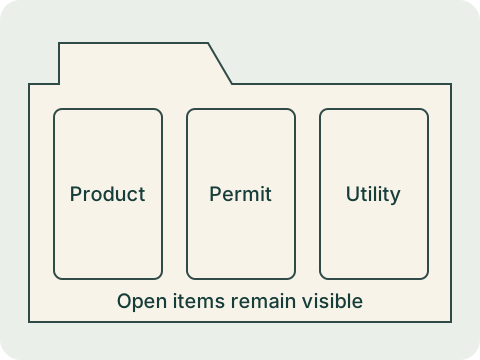
Request applicable local permit and inspection documents, the electrical contractor's project information, selected product instructions and relevant utility correspondence. Ask which documents are expected for the actual scope and address. A generic certificate or record for earlier work should not be treated as evidence for this installation.
Keep licence verification and proposal dates with the project record, while recognizing that those checks and technical acceptance serve different purposes. Preserve the actual findings and approvals without broadening their wording into a guarantee that every condition in the property has been assessed.
Make future planning understandable
Reconcile the final account with the accepted scope, user-entered quote comparison and written changes. Ask for an explanation of differences rather than replacing missing lines with a generic online price. Keep warranties and ongoing questions identifiable by equipment.
If future additions were discussed, record which products and assumptions were considered and which questions remain unconfirmed. The inventory sum remains an illustrative arithmetic record, not certified future capacity. A useful handover allows a later qualified reviewer to understand what was done, what evidence exists and what still needs assessment.
A worked planning example
The accepted proposal names one equipment model, while the installed-product record names a substitute. Ask for the authorized change and its effect on the project rather than assuming the products are interchangeable. Collect the relevant instructions and scope response.
A missing final document should stay on the outstanding list with the party responsible for obtaining it. It should not be replaced by a homeowner statement that the lights work. Similarly, a future equipment note should remain a recorded assumption unless supported by the actual review. This handover preserves useful detail for later work without claiming that every electrical condition in the property was assessed.
Keep in your brief
- Collect documents for this actual project.
- Keep observations and approvals distinct.
- Preserve future-equipment assumptions.
Primary references
- Permits — Houston Building Code Enforcement
Houston, Texas
- Consumer protection: electrical work — TDLR
Texas
- Electric service request — CenterPoint Energy
CenterPoint Houston electric service territory, where applicable